

Local brackish waters hold bass and many other fish
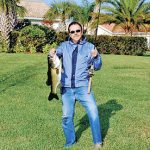
Although I clearly remember my very first childhood solo catch, a beautifully colored bluegill, THE most memorable “first catch” was my first 5-pound largemouth bass that missed my friends lure but on the next cast, inhaled my Heddon, frog-colored Tiny Torpedo.
With the primary focus of many local anglers being tarpon, snook, grouper and a boatload of other hard-pulling saltwater species in, near or offshore, freshwater largemouth bass fishing often takes a back seat in this part of Florida, the “Sportfishing Capital of the World”
At last count, freshwater bass angling is the most popular of the angling sports nationwide and it’s a safe bet that most Yankee transplants that now plug for snook or redfish cut their teeth throwing spinner baits, jigs or plugs for large or smallmouth bass.
Because of the similarities, freshwater bass anglers find it easy to transition to salt flats fishing, in many cases using the same lures and techniques they used on their favorite pond, lake or river. Spinnerbaits not only catch freshwater bass, but redfish as well, and in many cases in the same body of water.
Fly rodders that like using surface poppers or “bugs” around blow downs and lily pads for back-home bass, will get a whole new look on things when a 15-pound snook takes to the air challenging that 8 wt. bug rod.
Snook and tarpon can live in freshwater/brackish environments as well as freshwater bass thriving in brackish conditions.
Growing up fishing B.A.S.S. tournaments in the Mid-Atlantic states, half of the events were held on brackish rivers where your next cast might produce a largemouth or a hard fighting rock fish or striped bass.
Here we can multiply the odds of catching multiple species many times in the same system. Your next cast on the Caloosahatchee River might produce a largemouth or you may become hooked to a really large mouth — attached to a 150-pound chrome missile named tarpon which will be a fun problem on that spinner-bait outfit.
The hundreds of miles of canals in Cape Coral provide bass fishing and for other species as well. I’ve always had good luck using a blue or black plastic worm or a big topwater at night. My personal best Cape bass, just shy of 8 pounds, was caught late at night on an all-black, musky sized Jitterbug, slowly cranked along a weed-line.
All are aware that one of the best bass lakes on the planet, Lake Okeechobee, is a short drive from the Cape where your flats/bay boat will do just fine. Other roving bass addicts swear by Central Florida lakes like my personal favorite bass lake, Lake Toho or Tohopekaliga, where fishing is done either using lures or big shiners. A Toho horse shiner accounted for my personal best 10.6-pound bucket mouth. Toho is part of the Kissimmee Chain which also includes famous Lake Kissimmee.
Depending how far north or south you are on the peninsula and how cold the winter’s been, bass bedding spawning season goes on in very early spring peaking in February and March in Central Florida Lakes.
Bass are really everywhere from brackish river systems, frozen lakes, hot reservoirs, golf courses and neighborhood ponds, and available to everyone on foot or by boat which accounts for the popularity of the sport nationwide.
If you’ve recently located to the Cape and bass is in your blood, the good news is you’ve already got friends here. Cape Coral not only hosts the finest tarpon club in the country but we also have The Cape Coral Bass Club which, according to its website, hosts 29 tournament events per year with family memberships listed for $40/$25 single per year.
For additional information or to join, contact them at capecoralbassclub@comcast.net
Sea trout fishing good inshore, snapper snapping on near shore and offshore reefs.
Water is clearing and low winter tides are upon us. Fish and drive slowly.
Capt. George Tunison is a Cape Coral resident fishing guide. Contact him at 239-282-9434 or captgeorget3@aol.com.