

Garden Club of Cape Coral | Building a Florida-friendly garden: Part 8
By MERYL O’ROURKE
news@breezenewspapers.com
Hello, fellow gardener, welcome back! Part of being a good steward of my garden is being vigilant when it comes to pests. Lately, there’s been two unwanted visitors that have required removal.
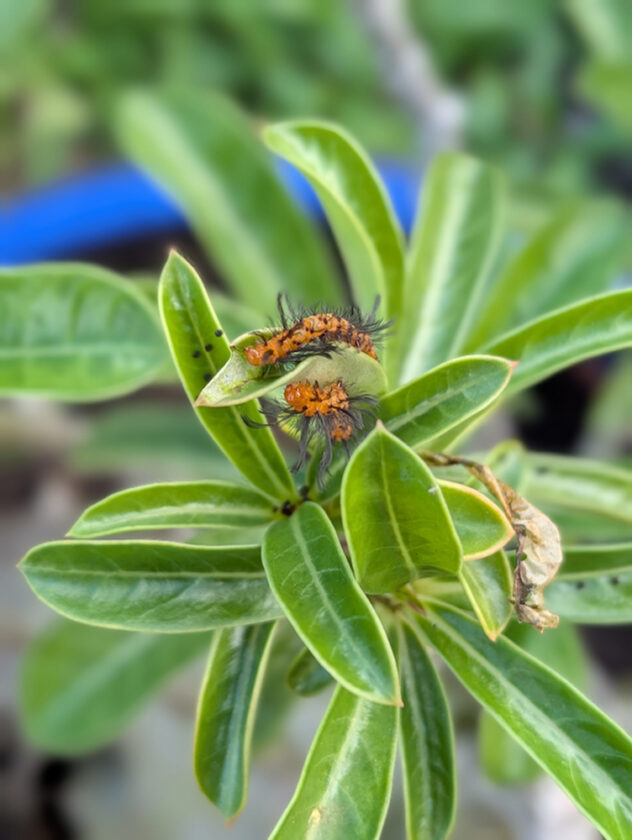
The first is the Oleander caterpillar, also known as Syntomeida epilais jucundissima. These bright orange caterpillars with black bristles and tufts tend to feed in clusters. They feed in groups, are especially fond of the undersides of leaves, and can rapidly strip and defoliate a plant. Above is a photo of several getting ready to belly up for lunch on one of my desert rose plants. If left unchecked, these pests will turn into bright polka-dot wasp moths. Another of their preferred cuisine is allamanda.
The good news is that control isn’t terribly difficult. First, check the undersides of leaves for egg masses. The eggs will be pale cream to light yellow in color, spherical in shape and less than 1 millimeter in diameter. The quickest way to remove them is to cut the affected leaf off and then clean your clippers with alcohol. If the caterpillars have already emerged, put on your gardening gloves and be prepared to physically remove them to a bath of Dawn and water. In other words, drown them.
After removing the offenders, go back to your plant for an inspection of the limbs. Oleander caterpillars can defoliate a plant very quickly, as well as destroy the limbs. This may turn into a time to prune your plant. Remember to clean any tools utilized with alcohol and wash your gloves afterward.
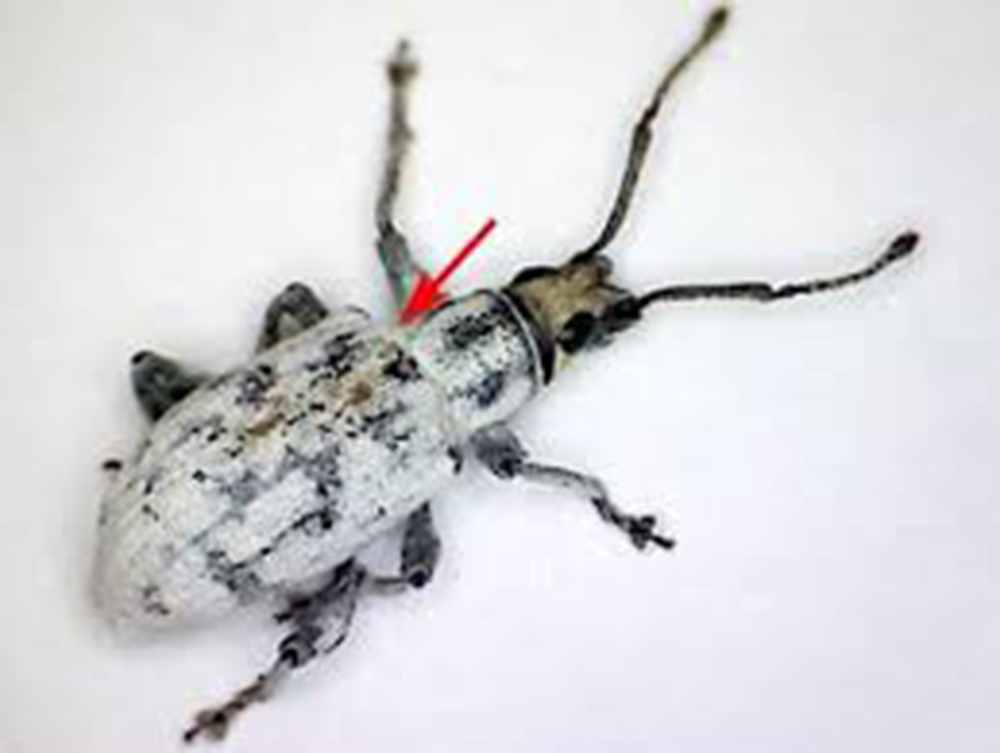
The other unwanted pest has been the Sri Lankan weevil, also known as the Myllocerus undecimpustulatus undatus. Some of these were found in the garden I volunteer at, feasting on cranberry hibiscus. Unfortunately, these pests have a long list of plants they use as hosts.
They lay their eggs at the soil surface, usually on organic material, with the eggs being white or cream, then gradually turning brown as they get close to hatching. Once hatched, they burrow into the soil, where they feed on plant roots for several months. At that point, you’ll begin to see the adults on the leaves, chewing their way inward from the leaf margins or edges.
Traditional methods of control include pesticides, many of which provide only limited management of this pest. Chemical control of the adults is difficult because of their ability to fly, hide, or feign death and drop to the ground. Chemical control of the eggs, larvae and pupae is more difficult due to their location on or in the soil. Adult weevils can be removed from plants by vigorously shaking a branch over an open, inverted umbrella. The collected weevils can then be dumped into a container of soapy water.
Meryl O’Rourke is a UF/IFAS Master Gardener. She volunteers at the Berne Davis Botanical Garden and the Goodwill Pathways to Opportunity Food Garden. For more information, visit gardenclubofcapecoral.com. Like us on Facebook and Instagram.