

Garden Club of Cape Coral | Fig trees can thrive with the right care
By JAN BARGMANN
news@breezenewspapers.com
When we first moved to Cape Coral 16 years ago, we began shopping for landscape materials for our bare yard. One stop was what I called the “plant orphanage,” where big-box stores tuck bedraggled plants they hope someone will rescue. There, we found a fig tree. When I asked the store clerk if fig trees would grow in Florida, she hesitated and said, “Not easily.” Always up for a challenge, we bought the tree and brought it home. My husband planted it using instructions he found online, only to realize later that they were for California — not Florida.
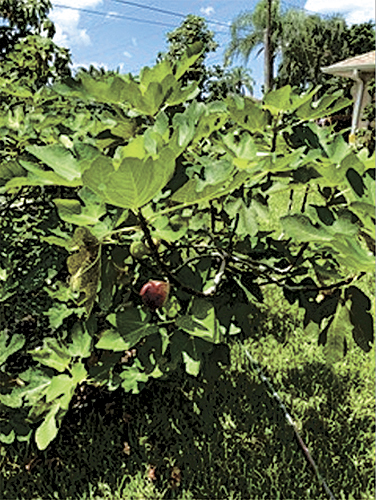
The “Fig Tree That Could” survived. It has produced crops of varying sizes, and the birds have enjoyed almost as many as we have. That experience led me to share practical lessons for choosing, planting and caring for fig trees in Cape Coral.
Choosing the right fig
There are several types of figs, but Brown Turkey and Black Mission are two varieties recommended for Zone 10. If grown in containers, Petite Negri is the recommended variety.
Planting and care
Following the first principle of the Florida-Friendly Landscaping Program — right plant, right place — fig trees can be grown in Zone 10 and prefer full sun. The recommended outdoor planting window is December through late February. Figs require well-drained soil and can die if their roots remain soggy in a wet planting site.
Soil preparation is important, and the first step is to take a soil sample to the Lee County Extension office for testing. The ideal pH range for figs is 6.0 to 7.5, with a preferred range of 6.0 to 6.5. Amend the soil as testing recommends. To prepare the sandy soils common in Southwest Florida, incorporate organic matter generously before planting to help reduce nematode damage, one of the primary threats to figs. Nematode populations are meaningfully lower in well-amended soils.
When ready to plant, dig the hole twice as wide as the root ball, but avoid planting too deeply because figs can develop crown rot when buried below the proper level. Place the fig in the hole with the root ball level with or slightly above the soil line, then backfill with the original soil. After planting, cut the tree back by one-third of its height to encourage lateral branching. Apply organic mulch at a depth of 2-4 inches, keeping it 4-6 inches away from the trunk.
If planting more than one fig tree, space trees 15-20 feet apart when growing them in tree form. In warmer zones, figs can be trained to grow upright rather than in the bush form often recommended for colder zones. Note: Fig trees may still tend to revert to bush form, even when started as trees.
Irrigation is important for fig production. A lack of water will reduce both fruit quality and quantity. Drip irrigation is preferred over spray irrigation because overhead spray can contribute to fungal diseases. Drought-stressed trees are also more susceptible to nematodes and may not fruit well.
For young trees, fertilization with a 10-10-10 fertilizer applied three to four times per year is recommended. Begin applications in February and continue through the end of July, while remembering to follow Cape Coral’s nitrogen fertilizer ban from June 1 through Sept. 30.
Pruning and harvesting
Pruning should be done after the fruit harvest in late summer, which allows buds to form for the following year’s growth. Heavy pruning of late-producing figs can result in a smaller crop — or no crop — the next year.
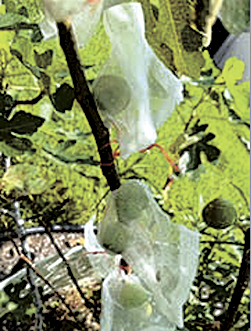
Fruit forms two to three years after planting and takes several weeks to ripen. I use nets or small mesh bags tied around each fig to prevent birds from pecking the fruit. Figs are ready to harvest when the stem begins to droop, the fruit turns brown, black or golden, depending on the variety, and a droplet forms at the ostiole, or “eye,” at the bottom of the fig.
References
For more about fig varieties and growing zones, see “How to Grow Fig Trees: 3 Varieties, Zone-by-Zone Timing, and the 90-Day Fruit Window” by horticulturist Marzena Rewers and “The Fig” by Ali Sarkhosh and Peter C. Andersen, with the University of Florida’s IFAS Extension.
Jan Bargmann is a Lee County Master Gardener volunteer and member of the Garden Club of Cape Coral. For more information, visit gardenclubofcapecoral.com. Like us on Facebook and Instagram.