

Garden Club of Cape Coral | Too much rain — again?
By CATHY DUNN
news@breezenewspapers.com
For the past several days I’ve been unable to work in my garden – either because it has been storming or the standing water has made any type of maintenance impossible. This situation inspired me to investigate the topic “Too Much Rain” for this week’s issue, and as I looked back on my previous articles, I discovered that I had written on this same topic 4 years ago in July! While I sometimes think the weather patterns are constantly changing, it appears that excess rain has been a concern of mine for some time!
Cape Coral averages 53 inches of rain annually, and according to the Southwest Florida Water Management District, the Southwest Coastal area (which includes Cape Coral) had already received over 140% of normal early wet-season precipitation by mid-July. This rainfall has lifted the groundwater levels by approximately 3 feet, completely erasing the historic drought conditions we encountered in early 2026. We are quite fortunate that this abundant rain has not been caused by tropical storms, although the rain we’ve experienced for the past few days appears to be caused by a disturbance that is now classified as a tropical depression.
You may ask what’s the harm in a little excess rain, other than increasing the mosquito population? Plants are easily inundated by too much rain, which can wash away mulch and soil from the plants’ roots. The rain can also damage plants which now exist in a perfect environment of hot weather and moisture that encourages bacterial and fungal problems. If you see signs of disease such as rotting or wilted stems, powdery mildew or leaf spot, it is best to trim the damage or remove badly damaged plants completely to discourage transmission to neighboring plants. You might also consider removing mulch from heavily inundated plants to discourage root rot. If you are tempted to go out after a heavy rain to inspect your plants, tread carefully – walking on muddy or wet soil increases soil compaction which can further injure your plants.
Once the landscape has dried out a bit, you should carefully remove litter, yard debris or other objects that may have collected during the rainstorms. Yard debris is one of the most common causes of blocked storm drains, so it is important to remove as much yard debris as possible to guard against blocked storm drains which can cause neighborhood flooding issues. If you are tempted to prune plants, wait until your plants have dried off as disease spreads easily through water. And while you may feel that a dose of fertilizer will help your plants recover, please remember that Lee County is in a fertilizer ban until Sept. 30. Besides, fertilizer won’t hasten your plants’ recovery and will probably only be washed off by the next heavy rain!
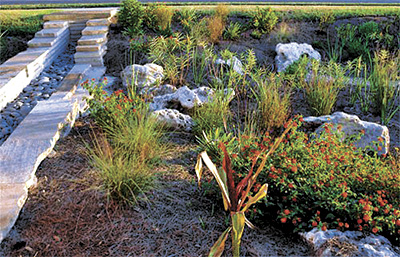
What are some positive approaches that you can take to harness this abundant rain? If you have areas in your yard that collect water after storms you can establish a rain garden to help prevent further runoff. Rain gardens are not just attractive, but they will collect rainwater and will help filter out impurities before the standing water is returned to the aquifer.
There are many plants that will tolerate both the summer rain and the dry winter season. Flowering plants such as iris, goldenrod, milkweed, spider lily and swamp sunflower would be good choices as they also support pollinators and wildlife. Ornamental grasses such as Florida gamma grass (fakahatchee) and Muhly grass are excellent options, and shrubs such as buttonbush, Virginia willow or wax myrtle will also thrive in rain garden conditions.
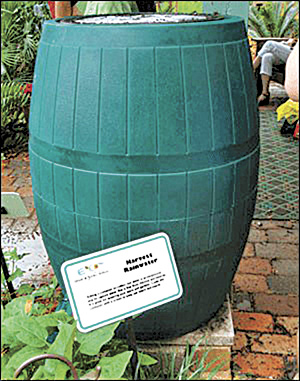
Incorporating a rain barrel in your landscape is another excellent solution for capturing excess rainwater and reducing runoff – and it will provide you with a free source of water for irrigating your plants. Rain barrels are routinely available in 50 to 80-gallon container sizes with fine screens to filter out leaves or insects; the barrels usually have a tap or small pump for dispensing the water. The barrel is generally attached to a downspout to capture water from your home’s roof.
Most area garden centers offer rain barrels for sale, and some County Extension Offices offer free rain barrel workshops with the containers available at no cost or for a small fee.
During the dry winter months, we find ourselves irrigating our gardens and hoping for just a bit of rain, while mid-way through this summer I find myself saying “no more! While abundant rain has many benefits, there are negative impacts as well and we need to be aware of the damage that can occur to both our landscape and storm drains. If we remain vigilant, we can minimize the effects of these torrential rains and take positive steps to address runoff!
Cathy Dunn is a Lee County Master Gardener Volunteer, Garden Club of Cape Coral member and past president of the James E. Hendry Hibiscus Chapter.
Visit gardenclubofcapecoral.com. Like us on Facebook and Instagram.