

Garden Club of Cape Coral | Building a Florida Friendly Garden, Part 4
By MERYL O’ROURKE
news@breezenewspapers.com
Hello fellow gardener, welcome back! I had planned to work on my walkway and share that journey with you; however, I was gifted several plants and decided to add them to the plan. Gardens are ever evolving, as is Nature.
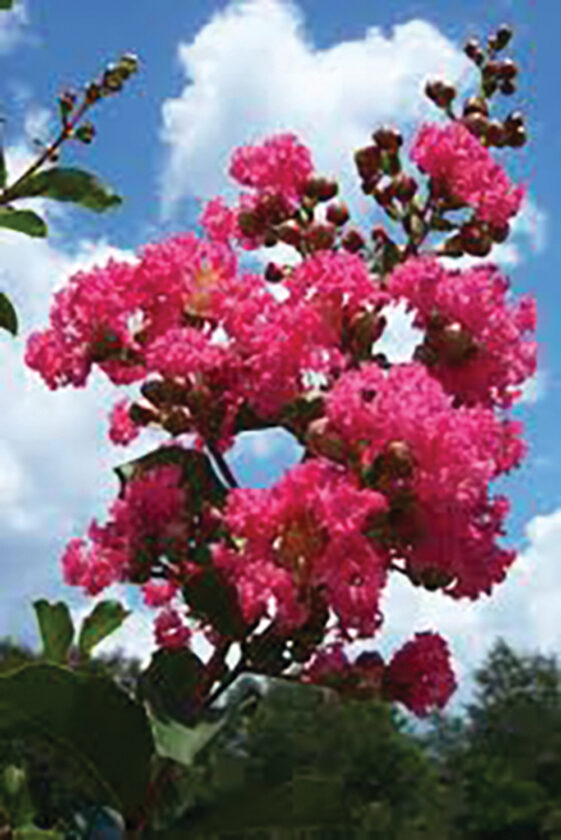
The first addition is crape myrtle (Lagerstroemia indica). A friend donated to the Arbor Day Foundation, and in turn, received 4 bare root plants, which she passed to me. I have no idea what color they are, so it will be a lovely surprise when they bloom! The advice from the Foundation was to soak them in water for 3-6 hours, which I did. I followed that up with planting them in 3-gallon pots until they were about 18″ tall and quite leafy. They’re tolerant of most planting conditions, with two exceptions. They don’t like to have “wet feet”. Second, they do not like to be planted too deeply. They prefer well-aerated soil or near the soil surface, so good drainage is important. When first planted, they do appreciate a bit of extra water. Once established, they are drought-resistant, making them a perfect plant for our winter weather.
This is a plant that needs full sun! No hiding in the shade for this one. Sun will enhance the flower colors, especially the vibrant reds. Flowering begins as early as May in some of the cultivars, continuing to fall. There are some cultivars that also feature beautiful, mottled bark. Crape myrtles can be anywhere from dwarf (less than 4 feet) to greater than 20 feet, so if you decide to plant one, remember to put the “right plant in the right place”.
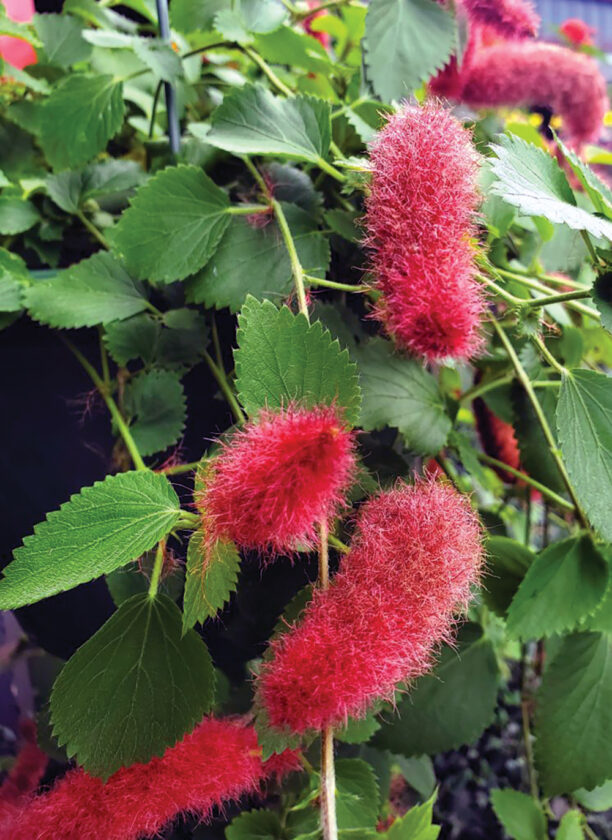
The other plants that will have a new home in my garden are chenille plants (Acalypha hispida). Originally from the South Pacific, chenille plants are a vigorous growing shrub that can attain a height of 4-6 feet, perfect for hiding the garbage cans on the side of my garage! The showy red flowers, called catkins, droop in a cattail-like manner and can be quite long, flowering year-round. Only the female plants produce the flowers – all plants available in the horticultural trade are female, luckily. These also are sun-loving plants and grow pretty quickly. I’m sure there will be some pruning to keep them manageable in the future.
I’ve got five of these plants and will be planting them together to form a hedge behind the ginger and curcuma previously mentioned in my articles. The crotons I had planted didn’t quite work out the way I had envisioned, so I removed them to pots until I find the right place for them. The chenille plants have a similar drought tolerance to the ginger and curcuma, making water requirements for that area very simple.
I always must remember, when working with either plants that I select, or gift plants, to follow the Florida-Friendly Landscaping 9 Principles, beginning with the first one – Right Plant, Right Place.
If it’s not too hot by the next column, I’ll get to the new walkway, as previously promised!
Meryl O’Rourke, a UF/IFAS Master Gardener, volunteers at the Berne Davis Botanical Garden and the Goodwill Pathways to Opportunity Food Garden.