

Garden Club of Cape Coral | Growing bulbs in Southwest Florida
What flowers come to mind when you think of bulbs? Probably blooms such as tulips and daffodils, which are such familiar harbingers of spring in colder climates. But these types of bulbs are problematic in Southwest Florida because they require an extended period of cool dormancy to trigger their blooms. It IS possible to have tulips in Florida if you purchase bulbs that have been “pre-chilled” for 2 to 4 months and plant them in the winter, but chances are that the hot Florida sun will cause your flowers to decline rapidly, and the bulbs rarely bloom again.
Rather than trying to force a non-tropical plant to flourish in the wrong environment, you should try your hand at growing bulbs that thrive in South-west Florida. There are many varieties of bulbs that can be added to your gardens that will provide not only a colorful addition to your landscape, but blooms that can be used in indoor arrangements. And the bulb’s long, strappy foliage also provides an interesting contrast in your garden.
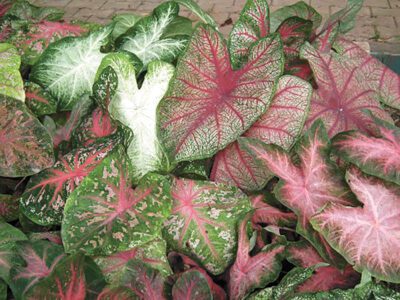
What exactly is a bulb? A bulb is basically a thickened underground storage organ which allows a dormant plant to survive unfavorable environmental conditions. Bulbs provide storage for nutrients and water during dormancy and in stressful periods such as cold, heat or drought. In Southwest Florida, most bulbs thrive in sunny locations but some bulbs, such as caladiums, will tolerate partial shade. Gardeners can choose from a wide variety of tropical and subtropical bulbs including Agapanthus, Amaryllis, Cannas, Crinum Lilies, Crocosmia, Hurricane Lily, Rain Lilies and Spider Lily.
To ensure success, your garden site should be well-drained and improved with organic matter such as peat moss or compost. Make sure your bulb is right side up when you plant it; the bulb will have a smooth tip and a rough underside, which is the root area of the bulb. Follow the cultural instructions for the proper depth and distance between bulbs, and the fertilizer requirements for your bulb. Some bulbs, such as amaryllis, will produce seed heads after flowering; if these seed heads remain on the bulb it will take some of the bulb’s energy and you will have less flowers the next year. It’s always a good practice to “dead head” your blooms after they fade; this will help the bulb preserve energy for the next blooming period. But don’t cut off the yellowing leaves of your bulbs; the leaves provide food and energy for the bulb and removing the leaves before they are completely brown and withered will deplete your bulb’s storage capacity.
When should you plant bulbs? Some bulbs can be planted in the fall, including gladiola, which will produce blooms about three months after planting. To extend the blooming period, try planting the bulbs at two-week intervals to enjoy the colorful spikes of bright blooms longer in the late winter/early spring. You may be fortunate enough to have some Amaryllis bulbs left from the holidays; I have had success growing these bulbs in pots for blooms indoors at Christmas, and then I transfer them to the garden where they will multiply rapidly and bloom in the spring (though usually not the first year after you plant them.)
You can get a head start on summer flowering bulbs by starting them in pots in the spring; caladiums, cannas and blood lilies are easily started in pots for transplanting into the garden. Use well-drained potting medium and 6 to 8-inch pots to start these bulbs, placing one bulb in each pot. The pots should be kept in a warm spot outdoors with good sunlight. As temperatures begin to rise you should move the pots to the garden for acclimation before placing them in your landscape. This technique will provide fuller plants with beautiful blooms sooner!
You can find many varieties of bulbs at local nurseries and garden centers as well as online. Florida is famous as the world’s number one source of caladiums, and you can find caladium growers either online or plan to travel to Lake Placid to purchase caladiums. Growers with online stores offer a wide selection of unique bulbs that are well suited to our sub-tropical climate, and you will have beautiful specimen plantings that are the envy of your fellow gardeners!
The University of Florida has excellent information on growing bulbs, with recommendations on the various bulbs that thrive in our climate as well as planting tips and detailed publications on bulbs.
I hope that you have been encouraged to try some bulbs in your landscape; they are low maintenance additions to your gardens that will reward you with spectacular and unusual blooms for many years!
Don’t miss the Garden Club of Cape Coral’s biggest fundraiser Saturday, March in the Park, at Jaycee Park, 9 a.m. to 3 p.m.
Cathy Dunn is a Florida Master Gardener Volunteer and Member Garden Club of Cape Coral.
To reach CATHY DUNN, please email news@breezenewspapers.com