

Garden Club of Cape Coral: Coontie – ancient plant becomes a landscape favorite
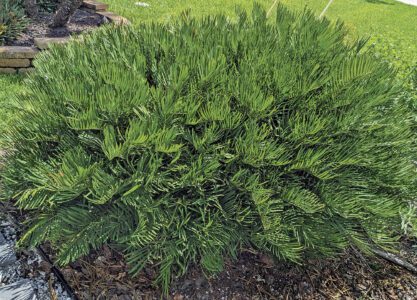
The coontie bush is a cycad, the type of plant that was prolific during the age of dinosaurs, 325 million years ago. As the only native cycad found in North America, it is native to south Florida and endangered. It has long stems that come from the base of the plant with short pointed leaves all along the stem, similar to a fern. Yet the leaves are tough, almost like cardboard.
Coonties (Zamia integrifolia) were common throughout south Florida for hundreds of years. Their roots contain a dangerous neurotoxin called cycasin. Native Americans learned to soak the toxins out of the root, mash and dry them into flour, from which they made bread. Seminole tribes named the plant conti hateka, meaning white root or white bread. The Seminoles taught the process to the early settlers near Miami. By the 1880s, several processing mills had been built. By the time World War I occurred, as much as 18 tons of coontie plants a day were being processed for the military. This wiped out most of the coontie that was available. Later on, clearing the land for development wiped out most of the rest. Thus, it landed on the endangered list.
It has been revived by landscapers, who have found that it is an attractive and durable plant for Florida gardens. It gets about 3 feet tall and wide, is drought tolerant and somewhat salt tolerant, making it a great plant for our coastal yards. You do not trim it, just like you would not cut a fern’s leaves in half, as it would look ridiculous. I have seen coonties in medians, chopped with blunt ends.
So plan for its size. Even though it starts out small, give it a full 3-4 feet in width. (Plant small, short-lived plants around it for a few years if you like to fill the space.) To trim, cut the lowest, oldest branches at ground level, as they age and turn brown. Mature coonties only get new leaves once per year, in May-June. This is when I trim my plant of some of the old growth. It needs no extra watering after it is a year old and established. It needs no fertilizer either as it prefers our natural soils. It grows in sun or shade. Since it needs so little maintenance, you can understand why it is a popular foundation plant. I enjoy my 20-year-old coontie plant because it continually looks great and asks for nothing. But there’s more!
Bonus: butterflies! The stunning Atala butterfly, purported to be extinct in 1965 was rediscovered in the keys in 1979 by Roger Hammer, who helped them reproduce enough to establish a viable colony.
Atala butterflies only lay their eggs on coonties. Without the plant, there is no butterfly! We now have a few atala butterflies in Cape Coral, at Rotary Park and at the south library in the fenced area outside the back door. About the size of a nickel, they are dark blue with light blue spots and a red abdomen. Look for them on the flowers of the sweet almond bush.
Gardening in our part of Florida is about knowing what has been here, how it provides beauty and how it sustains life unique to our piece of paradise. Grow Native!
Sherie Bleiler is a volunteer at the Cape Coral Library Butterfly Garden and a member of the Garden Club of Cape Coral. Visit gardenclubofcapecoral.com. Like us on our Facebook page.
To reach SHERIE BLEILER, please email news@breezenewspapers.com