

Guest Commentary | The Veteran
“From the Halls of Montezuma to the shores of Tripoli….”
— Marines’ Hymn
The American veteran has always held a somewhat mythic place in our history. We see him as the young man heading for the enemy beach, the pilot shooting up the sky, the sailor on watch at sea. We also see him as the old man with the VFW cap, the cripple in a wheelchair, the soul broken in spirit.
While not quite at the forefront of our thoughts, we look to them as living emblems on each Veterans Day, Fourth of July, Flag Day, and Memorial Day, and whenever we need to revitalize the celebration of our freedom.
We lionize their bravery and bravado, as well as their wit in the heat of battle. Who can forget Captain Jones’s “We have not yet begun to fight” and General McAuliffe’s reply, “Nuts,” to the German demand to surrender?
How can we forget how they suffered at Valley Forge, at Belleau Wood, at Hamburger Hill, and in other remote and lonely places around the world?
How could we possibly know their courage as they faced unrelenting artillery, the ceaseless chatter of machine-gun fire, the pounding of concussion waves against the submarine hull, and the order to go over the trench wall?
Yet war is not only fighting and relentless courage in the face of the enemy. Not all of our vets can be Sergeant Yorks or Audie Murphys, nor can they all be battle-scarred or hardened combat fighters. Those are the ones easily remembered and depicted in countless movies and stories.
There were thousands of others whose skills and expertise supported the ground, naval, and air combat soldier. We tend to forget that even the lowly mail clerk working an eight-hour day was part of the great wheel that kept the war machine going.
For the most part, the jobs that kept the armed forces running were routine and tedious. But whatever the job, it was necessary to complete the mission. The skills of numerous occupations went into accomplishing that mission: doctor, cook, mechanic, carpenter, typist, printer, sailor, builder, pilot, laborer, plumber, cartographer, engineer, butcher, baker, and candlestick maker. When it was called for, simple Yankee ingenuity and common sense often saved the day.
The two great wars of the 20th Century provided opportunities for many American men and women to serve their country in many ways. The Second World War, in particular, laid the foundation for women to enter the pantheon of veterans who served their country.
War and sacrifice were not new to women. Molly Pitcher, Betsey Ross during the American Revolution; Clara Barton, Dorothea Dix, and Sarah Emma Edmonds (Union nurse and spy) during the Civil War; Lucy Brewer, the first woman Marine, during the War of 1812; the numerous nurses, USO volunteers, WASPs, and WAVES during World War I and World War II; and those serving since then to this day.
Like the opening of the Marine Hymn, the American soldier has found himself on the soil of many lands and climates, on the outposts of freedom far different from anything at home. Stifling desert heat, freezing Arctic and Antarctic cold, stormy seas, steep mountain tops, humid tropical forests, and balmy South Sea Islands are all the domain of our armed forces’ men and women.
The soldier, like the citizen he was, came from every ethnic, religious, and political background. They were tall, short, heavy, skinny, witty, serious, reserved, and outgoing, bringing to the armed forces every notion, idea, and belief they had been raised with. Yet after boot camp, they became a cohesive group with a fixed set of goals.
When the training became real-life combat or support, they fought, worked, and played as the team they had become. When the opportunity presented itself, they became the flag raiser on Iwo, the last man off the ship, and the red tape cutter.
It was an all-inclusive club whose membership card was the uniform they all wore proudly. This was no wonder, since while in uniform they were the Army, Navy, Air Force, or Marines, representing an exclusive club of Americans.
Whether together or alone, their fellow countrymen would pause what they were doing or thinking to wonder where this uniformed man or woman was going or coming from. It was hard not to ask what they did, what they had seen, where they had been, and where they were going. And when they told you, you became part of their history.
The impression they always gave was that yes, I am strong, I am resilient, and you can depend on me to protect you.
Like those before them, they found something within themselves that not only changed them forever but also gave them the inner strength to do a difficult, often thankless job under sometimes impossible circumstances. They did it with all the gusto it took, and in doing so they remade themselves and the country they served.
Every generation of American soldier, from the minuteman to the doughboy to the soldier tech of today’s military, has renewed and built upon the heritage gleaned from 250 years of protecting this nation. Each generation has found a way to build on the legacy of courage and sacrifice of the previous generation, and each has given us all pause to be proud of them and our country.
We are not the only ones thankful for their dutiful commitment to freedom. The blood and toil of our veterans have given rise to, and continue to preserve, the liberty of countless millions worldwide. Without selfish intent, without a wish to conquer, and without a wish to harm unduly, the soldier, the sailor, and the airman have brought the blessings of peace to many in an otherwise cruel and unforgiving world.
With our armed forces on every continent, on every sea, at the top and bottom of the globe, at every meridian and latitude, it could be said that the sun never sets on the American soldier and his mission to preserve our freedom.
When the conflict was over, the soldier, like the caterpillar, transformed. He put away his uniform, melted back into the society he had come from, picked up where he had left off, and became the doctor, the businessman, the cop on the beat. In his heart, though, he had never forgotten what he had learned, what he had seen, and what he had done in lands so far away. That will always be part of him.
This is the reason we celebrate this man, this woman, this citizen, this soldier, this veteran.
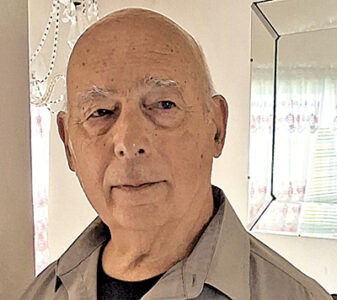
Philip L. Abbondanza is a veteran of the United States Air Force and a resident of Cape Coral.