

No historic designation for Cape Coral’s first park
City Council declines nomination of Four Freedoms Park
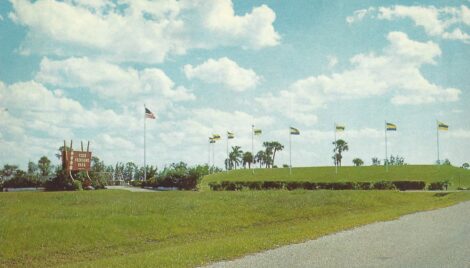
Cape Coral’s first designated public park will not get an historic designation.
The Cape Coral City Council declined the nomination of Four Freedoms Park as a historic and/or cultural resource Monday, meaning the Bimini East agreement that includes a $1-a-year lease for the waterfront park acreage will continue.
Council members Keith Long and Rachel Kaduk voted against the denial.
City Manager Michael Ilczyszyn said Cape Coral has a city code for an historic nomination.
Resident Louis Madden made the nomination request on Oct. 7 to allow for more study before the site was altered.
According to the letter Madden submitted, “because Ordinance 55-26 and the related Bimini East agreements currently contemplate a 99-year ground lease involving Four Freedoms Park, I respectfully request that council avoid authorizing demolition, relocation, or irreversible material alteration of the historic site while this nomination receives the hearing and consideration required by 2-120.19. This request is not intended to misstate the ordinance: 2-120.20’s Certificate of Review requirement expressly applies to a historic or cultural resource after designation. The purpose of the interim request is to allow the City’s preservation process to have practical meaning before irreversible action occurs.”
Ilczyszyn said the nomination was made to try to stop the Bimini East agreement and to have that done before irreversible changes occur.
“I have been an employee (with the city) for 22 years,” he said. “The reason that we asked for the amphitheater to be in the RFP is because there is an amphitheater lawn.”
Four Freedoms Park had the first amphitheater in the city, Ilczyszyn said, adding there was also a beach at the riverfront park. He said there have already been irreversible physical changes that have happened at the site.
The amphitheater lawn, and hill, Ilczyszyn said was part of the lawn he removed as the public works business manager probably 18 years ago.
“The reason I did that, the then-CRA board, which was a board of citizens, recommended to put a beach back there. To do that, the amphitheater lawn was in the way,” he said.
Ilczyszyn said the nomination was not based on the historical use, but based on what they know today.
“We are looking to bring back the amphitheater and part of the city’s history. The reason for the denial for the recommendation is because all the things stated have already been an irreversible change to the park and we already moved forward with the DA (developers’ agreement),” he said.
Four Freedoms Park, Ilczyszyn said, was the second park to open in the city, as the Yacht Club opened three years prior.
“This park was started in 1963 and opened in June 1964,” he said.
Although the recommendation was to deny, Ilczyszyn said staff will work with the historical society to develop a sign that discusses the history of the park.
“The deed restriction to be open to the public rides on the land. None of that goes away,” he said.
Councilmember Laurie Lehmann questioned the denial, as assigning the historical or cultural designation to the site would bring any changes made to Four Freedoms Park by the developer, Crown Development, before the council before approval
Ilczyszyn said the designation would essentially kill the project.
City Attorney Aleksandr Boksner said the city received an email from the developer’s attorney stating that such a request would be detrimental to the plans for improvement for the park contemplated by the development agreement.
The founders considered Four Freedoms the first public park. Homebuyers in the then-fledgling city received a membership to the Yacht Club with its amenities, including a “ballroom” and pool.
The park is named for former President Franklin D. Roosevelt’s “Four Freedoms Speech,” which was made during the annual State of the Union address to Congress on Jan. 6, 1941.
The four freedoms were for freedom of speech and expression — everywhere in the world; freedom of every person to worship God in his own way — everywhere in the world; freedom from want — everywhere in the world; and freedom from fear — “a world-wide reduction of armaments to such a point and in such a thorough fashion that no nation will be in a position to commit an act of physical aggression against any neighbor — anywhere in the world.”
To reach MEGHAN BRADBURY, please email mbradbury@breezenewspapers.com