

7,828 burrowing owls counted in census
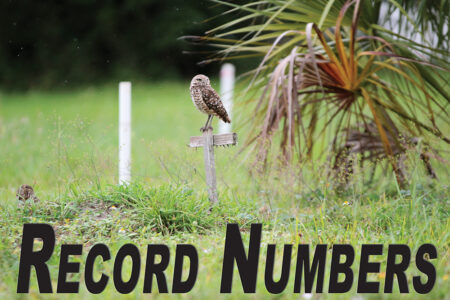
Cape Coral’s wildlife advocacy organization has some encouraging news when it comes to the population of the city’s official bird.
According to data collected by the Cape Coral Friends of Wildlife, a record number of burrowing owls were counted during the 2026 Cape Coral Burrowing Owl Census.
CCFW volunteers documented a record 7,828 burrowing owls, up from 7,008 counted in 2025, reaffirming Cape Coral as home to Florida’s largest known population of this threatened species.
“CCFW is really pleased to see that Cape Coral’s burrowing owl population continues to be healthy,” said CCFW spokesperson Janet Windisch. “There are so many threats facing these special birds, from habitat loss associated with development to rat poison and automobile strikes, so we were very excited and gratified to see the numbers continue to increase. It’s encouraging to see that all of the conservation work being done in our community is helping support a healthy owl population.”
The census was carried out over the weekend of May 16. Officials said most of the counting was completed on that Saturday, with some volunteers continuing their work on Sunday. Approximately 140 volunteers participated, and CCFW also thanked the Cape Coral Parks employees for their collaboration.
“Our passionate volunteers put in thousands of hours each year, and we believe that work is making a difference,” Windisch said. “We mark and monitor new burrows, clear vegetation around burrows, respond to issues in the community, and spend a great deal of time educating residents about how they can help protect burrowing owls. Seeing a healthy and growing population makes all of that effort especially rewarding.”
This year’s census documented 6,792 burrows, providing critical data that helps guide conservation, research, and future management efforts.
The increase is especially encouraging as Cape Coral continues to experience rapid growth and development. As vacant lots disappear, so does important burrowing owl habitat. The record census demonstrates that conservation efforts can make a real difference, but it also underscores the need to remain vigilant as development accelerates.
“We don’t want anyone to become complacent,” Windisch said. “While the population is doing well right now, there are ongoing threats, particularly habitat loss associated with development. We don’t know whether the population will continue to be as strong in the future, which is why CCFW is committed to continuing to acquire and protect land for owl habitat, advocate for conservation measures, and educate the community about Cape Coral’s remarkable wildlife. Burrowing owls are an important part of what makes Cape Coral special, and they are worth protecting and fighting for.”
Along with the efforts of CCFW and its volunteers, Windisch said the collaboration of the community as a whole is responsible for the census numbers this year.
“We are so grateful to the community members who contact CCFW when they see a problem or have concerns about an owl or a burrow,” she said. “Many neighbors have starter burrows installed in their yards to provide habitat for owls that need a home, and that kind of community involvement is incredibly encouraging.
“When we attend community events, we are always amazed by how many residents and visitors stop by our booth to show us photos of owls they’ve seen in their neighborhoods. People really love these birds, and that enthusiasm and willingness to help is an important part of creating a community where burrowing owls can thrive.”
The city itself also plays a role in keeping the official city bird alive and well. City staff contributions include enforcement of regulations, maintenance of a citywide wildlife map, and efforts secure grants to purchase wildlife habitat.
CCFW officials said the large number of juveniles documented during the census also points to another successful breeding season and highlights the value of continued habitat protection throughout the city.
Although Cape Coral’s burrowing owl population is flourishing, the species remains listed as threatened in Florida. Habitat loss, vehicle strikes, and secondary poisoning from rodenticides continue to threaten populations statewide. As Cape Coral grows, protecting the remaining habitat and encouraging owl-friendly neighborhoods will be more important than ever.
Support burrowing owls by:
• Avoiding the use of rat poison and limiting pesticide use.
• Installing starter burrows on their residential property. Call CCFW at 239-980-2593 or visit ccfriendsofwildife.org for further information.
• Reporting new burrows to Cape Coral Friends of Wildlife.
• Volunteering or donating to support local conservation efforts.
Cape Coral Friends of Wildlife is a volunteer-driven nonprofit organization dedicated to preserving and enhancing habitats for protected wildlife species in Cape Coral. Through education, habitat protection, and community engagement, CCFW works year-round to ensure that Cape Coral’s iconic burrowing owls continue to thrive for generations to come. For more call CCFW at 239-980-2593 or visit ccfriendsofwildife.org.
To reach CJ HADDAD, please email cjhaddad@breezenewspapers.com