

The Greatest Generation | Film screening set for Sunday at Coralwood
A Cape Coral filmmaker will debut a project locally this weekend, bringing recollections from members of the Greatest Generation to life on-screen.
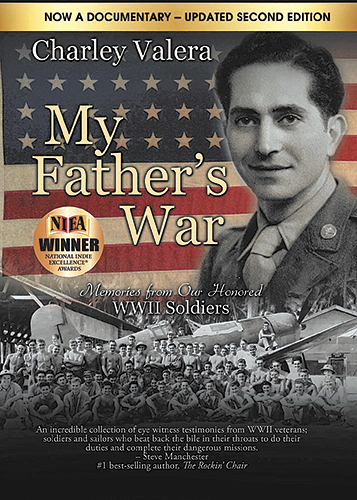
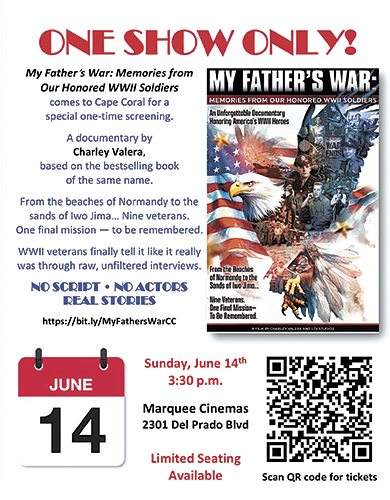
Charley Valera will present a special one-show-only screening of his acclaimed documentary “My Father’s War: Memories from Our Honored WWII Soldiers,” this Sunday at 3:30 p.m. at Marquee Cinemas Coralwood.
World War II veterans sharing deeply personal stories of survival, sacrifice, fear, humor, and everyday life during the war. Through firsthand interviews, audiences gain a rare and emotional glimpse into what America’s “Greatest Generation” experienced both on and off the battlefield.
Valera’s documentary is closely tied to a book he wrote in 2017 of the same title, where he spoke to 18 World War II veterans to hear their stories.
“I was inspired to create the project after realizing my own World War II veteran father rarely spoke about the war, much like countless veterans of that generation,” Valera said. “What began as a bestselling book eventually evolved into this documentary.”
Valera’s father was an Army/Air Force veteran, who was part of 11 campaigns. Valera said he was not even aware of the vast service his father took part in until he received his discharge papers following his death.
“He never had a word to say about it,” Valera said. “I found out where his campaigns were. He was in Normandy. He was in the Battle of the Bulge in the Ardenne Forest. He was in Sicily, which is where my family is from. So, I knew there was something missing. When I started interviewing these veterans, I thought, ‘I think I need to paint this a little differently.'”
Valera decided to cover all branches of the military, and various theaters of war.
“So if your grandfather was a Marine, and never talked about it, you could at least get an idea of what the Marines were like. Or at least what the life of one particular Marine was during the war.”
Following a successful book release, Valera took the veterans to a studio to film them again (he had previously filmed them for the novel). When his book was released, only nine of the 18 veterans he had spoken to were still living.
“By then, we’re all really good friends,” he recalled. “I told them we won’t go where you don’t want to go. You don’t have to talk about anything you don’t want to talk about.
“My intentions were also to have the families of these veterans to be able to look back at this and say, ‘Wow. That was my grandfather?’ Or great grandfather. It turned out that most of the family members had not ever heard the stories that I heard.”
Valera said he had roughly 25 hours of film that needed to be fully edited, which he did himself over a couple of years.
The documentary made its premier in Valera’s home state of Massachusetts last week on the anniversary of D-Day to two sold-out theaters.
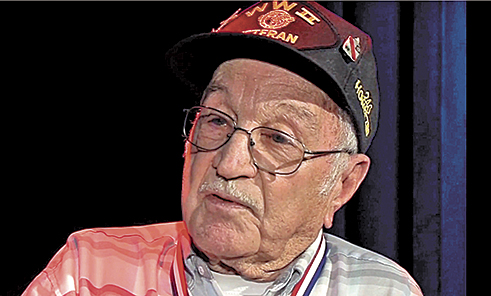
There, 101-year-old World War II veteran Charlie Sanderson received a standing ovation before sitting down to watch his own story on the big screen. He is the only remaining veteran who was filmed for the documentary who is still alive.
“It’s not a war movie,” Valera said. “It’s nine real American veterans telling, in their own words, what they experienced from Normandy to Iwo Jima–stories many of their own families never heard.”
Of the showings landing on D-Day, and this Sunday, Flag Day, Valera said the choice was intentional.
“It just meant more,” he said. “It meant a lot to me. I put a lot into this, and I want their stories to be remembered. This is not a black-and-white war movie we often see. I wanted to know how they lived. One of the guys talked about living on a battle ship and being hit by a torpedo. What were the smells? What was the sound? What did you see? If you could sit with a veteran and ask anything you want for three hours — those were the questions that I asked.”
Valera spoke about his father — that he was “different.” That he would come home from his job at General Electric, put on a suit, and went out. That you wouldn’t ask where he’s going and when he’s coming home.
Valera, who is a pilot, recalled going to a show in Oshkosh one year, and he spoke with an airman who gave him a copy of his father’s discharge papers.
Valera, who wasn’t sure of what the papers said exactly, remembers distinctly that the airman said, “You have to find this guy and thank him.”
Valera’s father had passed away 15 years before that conversation, but the airman explained to him what battles and arenas of war his father took part in and the awards he received.
“We never knew any of this,” Valera said. “He was a corporal. It piqued my interest and I wanted to talk to guys like my father. The guys that were in the trenches. One guy spent 210 days on the front line. Another guy said he wore the same clothes for a year-and-a-half.”
Valera said the documentary is for the veterans, and also for family members like him who had no idea of what their relatives went through during those harrowing battles and time overseas.
“A lot of the veterans were protecting family,” Valera said. “Families didn’t even know half of the stuff that I learned interviewing these veterans. I hope the documentary helps shed a lot of light on why maybe their parents or grandparents were a certain way.
“Half of these guys told me they didn’t think they’d live to see 20. They didn’t expect to come home.”