

Biting Back
LCMCD uses a variety of control techniques to reduce mosquito population
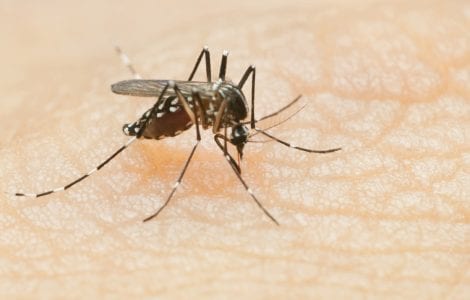
As Florida’s rainy season gets underway and afternoon showers are part of the afternoon commute, breeding conditions for the pesky mosquito will drastically improve.
The Lee County Mosquito Control District works year-round to curb the insect that can leave you with itchy bumps and can carry disease.
LCMCD uses a variety of biological, mechanical, and chemical control techniques to reduce mosquito populations, with all materials used thoroughly tested as part of the U.S. Environmental Protection Agency registration process.
The materials used to control mosquito larvae are called larvicides, and are applied by ground and air using advanced technology including satellite navigation and global positioning for precision application targeting.
“We continue to have crews out daily completing inspections and treating areas when needed,” said LCMCD Community Engagement Coordinator Jamie Fowler. “Treatments are based off of surveillance and data. The district uses data from daily inspections and traps in order to determine and justify a treatment for the area.”
While a mosquito’s adult life span lasts typically three to six weeks (up to five months in favorable condition) and many serve as food for birds, dragonflies, and spiders, their bite can transmit unfavorable virus to animals and humans.
Mosquito-borne diseases such as malaria, dengue, fever, yellow fever, West Nile virus, Zika, and others, can pose a risk to humans. The LCMCD, thanks to its organized methods of control, has greatly reduced the incidence of such diseases. The district monitors for arbovirus transmission using mosquito pools from trap collections and by using sentinel chicken flocks distributed around the county.
“If any diseases are detected, that area of the county is thoroughly inspected and treated to eliminate mosquito activity,” Fowler said.
Pest control professionals say one specific species, the Asian Tiger Mosquito, is spreading rapidly across the country. This is the small, dark mosquito with distinctive white stripes on its legs and body. The reason this species is a concern is its ability to serve as a disease carrier and transmit dengue fever, chikungunya, and Zika virus.
LCMCD’s Applied Science and Technologies Manager Rachel Morreale, said while this species may be expanding its range, it first arrived in Jacksonville in 1986 and has been present in Lee County since ’91.
The Asian Tiger Mosquito, or, Ae. albopictus, “is a container breeding mosquito that uses cryptic sites around people’s homes as larval habitats,” Morreale said. “This means that bird baths, plant saucers, old toys, pet bowls, bromeliads, clogged gutters, tires, etc. can all make excellent homes for babies.”
She said it is a daytime-biting mosquito that can be found throughout the county but tends to be localized to sites with abundant container habitats.
“The most effective way to get rid of these mosquitoes is to remove the larval habitat — dump and cover water sources — however this can be difficult on a large scale,” Morreale said. “We are able to use larvicides and adulticides to help reduce the population when source reduction isn’t an option.”
As for the disease they may carry, Morreale said, “Fortunately, none of these viruses are currently circulating in Lee County. When imported cases are detected, we conduct surveillance to see if we catch (this species or other mosquito species) and will treat the area if we need to. While this is an invasive, exotic mosquito that has the potential to be dangerous due to the diseases it can carry, it is not new to our area and LCMCD has extensive experience in working to manage this species.”
So, what are the best ways to stay protected from mosquitos?
“Avoid being outside when peak mosquito activity occurs, between dusk and dawn,” Fowler said. “Wear long-sleeve shirts and pants, and use mosquito repellant.”
Fowler said residents are always welcome to call their office at 239-694-2174 or visit www.lcmcd.com to submit a service request if you notice an increase in mosquito activity.
“This information goes straight to the operations department. Once it is assigned, an inspector will come and check the area,” Fowler said.
LCMCD posts all of its nighttime treatments online at www.lcmcd.com/treatment-schedule/ and on social media @LeeCoMosquito.