

Fine, warning issued over work done too close to gopher tortoise burrow
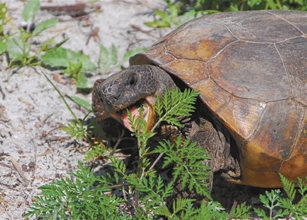
Dirt from a pool construction project deemed to have been placed too close to protected gopher tortoise burrows in an adjacent vacant lot resulted in a $500 citation for a Cape Coral homeowner and a notice of warning to a local contractor.
According to the city, Cape Coral Code Enforcement handed the homeowner the penalty on Aug. 3 after a City of Cape Coral planner visited the site along Northwest 7th Terrace on July 31.
“A site check was conducted and building material was being stored on a vacant lot too close to gopher tortoise burrows,” said city spokesperson Maureen Buice. “Seven burrows were found. FWC was contacted and also responded to the address.
“The material was moved and a buffer was put into place. The burrows were scoped by Environmental Resources staff and there was no evidence of any injured tortoises.”
Buice said a $500 citation was issued per state law and city ordinance which states, in-part, “for gopher tortoises, a protection zone having at least a 25-foot buffer shall be maintained around the entrance of potentially occupied burrows during all phases of construction. A protection zone shall comply with Commission guidelines, as such guidelines may be amended.”
When contacted by phone, the homeowner did not provide comment.
Buice said the contractor for the project was also issued a warning for improperly completing the Burrowing Owl/Gopher Tortoise Affidavit, indicating there were no burrowing owl/gopher tortoise burrows found on the property, adjacent properties, or right-of-way.
Cape Coral Friends of Wildlife Vice President Pascha Donaldson was pleased by the city’s action. The area where the city says the infraction occurred was clearly marked with signage and is a popular spot for gopher tortoise, she said.
“That whole area is full of gopher tortoise,” Donaldson said. “We’re glad there was a fine issued.”
Florida Fish and Wildlife also responded to the reported violation.
According to FWC officials, the contractor did have proper permits from FWC for the homeowner’s address, but fill dirt from the project was located on an adjacent property with a gopher tortoise burrow that did not have a permit.
“The City of Cape Coral required the company to remove the fill dirt by hand from the property with the hopes that a gopher tortoise, if present, would be able to dig out of the burrow,” said FWC spokesperson, Melody Kilborn, in an email.
Gopher tortoises are long-lived reptiles that occupy upland habitat throughout Florida, including Cape Coral and Southwest Florida. The species dig burrows for shelter and forage on smaller plants. They share their burrows with more than 350 other species and are referred to as a “keystone species.”
In Florida, the gopher tortoise is listed as “Threatened.” Both the tortoise and its burrow are protected under state law. Gopher tortoises must be relocated before any land clearing or development takes place, and property owners must obtain permits from FWC before capturing and relocating tortoises.
-Connect with this reporter on Twitter: @haddad_cj
To reach CJ HADDAD, please email cjhaddad@breezenewspapers.com