

Storm Debris Cleanup
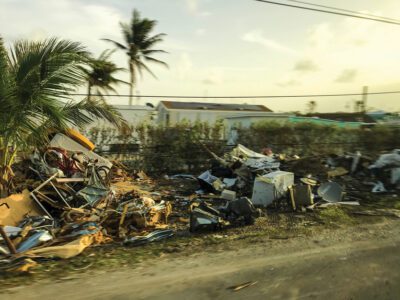
To ensure that debris is collected in the most efficient, safe, and timely manner, we recommend you follow these simple guidelines.
• Local media will notify when collection will take place.
• Do not place trash, recycling or debris near low hanging objects, around mailboxes or utility equipment including power poles/lines, electric meters or fire hydrants.
• Small quantities should be prepared the same as your weekly collection, in containers or recyclable bags/bundles 50 lbs. or less.
• Large quantities of vegetative debris should be piled at the curb for mechanical collection.
• All white goods must be empty. Any containing food or other waste will not be collected. (See Priority 3)
• Use your regular collection container or heavy duty plastic bags. Place in your normal location for weekly collection
• Do not mix materials.
• Separate collections for each material.
• Land clearing and landscape improvement activities are not eligible for collection.
• No collection of large quantities of yard debris on private roads or in gated communities unless included in a FEMA declaration.
• Businesses and owners of vacant lots are required to make their own arrangements for debris clean-up.
• Pickup Priority Levels:
◦ Priority 1:
▪ Normal Household Garbage
▪ Bagged garbage
▪ Discarded food
▪ Packaging materials
◦ Priority 2:
▪ Normal Household Recyclables
▪ Newspapers
▪ Cardboard
▪ Plastic containers (#1 – #7)
▪ Glass
▪ Steel
▪ Aluminum
▪ Yard Debris
▪ Shrubs
▪ Palm fronds
▪ Tree / grass trimmings
▪ Bushes
▪ Leaves
▪ Twigs/cut tree branches
◦ Priority 3:
▪ White Goods/Appliances
▪ Refrigerators
▪ Ranges
▪ Washing machines
▪ Dryers
▪ Water heaters
▪ Freezers
▪ Microwaves
▪ Air conditioners
▪ Construction/Demolition Debris
▪ Lumber
▪ Glass
▪ Drywall
▪ Insulation
▪ Concrete block
▪ Plumbing
▪ Recyclables
▪ Bulk Items
▪ Electronic Equipment
▪ Tires
Recycling Smart is easy!
Recycle Smart – 5 for the Cart
There are only 5 things to remember –
1. Paper – no soiled, shredded, metallic or waxed.
2. Metal – only aluminum or steel (tin cans, aluminum foil and disposable foil pans.
3. Cardboard – any kind of box that doesn’t have waxed coating.
4. Plastic – containers labeled #1 – #7 – no bags, no Styrofoam.
5. Glass – bottles and jars that are clear, green or brown.
Placing anything else in your cart is “Wish-cycling” – the most expensive disposal method of all.
Lee County Solid Waste Division – www.leegov.com/solidwaste – 239-533-8000.
Source: Lee County Emergency Management