

Property taxes vs. home values report: Cape Coral-Fort Myers metro ranked No. 11
Ranked among the country's top 100 markets where property taxes are growing faster than home values
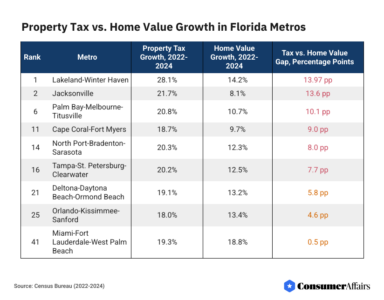
In a national research organization has ranked the Cape Coral-Fort Myers metro number 11 among the country’s top 100 markets where property taxes are growing faster than home values.
“In Florida, property taxes have outpaced home values more than anywhere else in the country,” a release issued by ConsumerAffairs today states.
Its research team analyzed 2022-2024 Census data from the 100 largest U.S. metro areas to find where property taxes are growing faster than home values.
The Lakeland metro area ranked No, 1 nationally “for the biggest gap between property tax growth and home value growth, with a difference of almost 14 percentage points,” the release states.
“Between 2022 and 2024, the median amount of property taxes paid in the Lakeland-Winter Haven metro increased by 28% — that’s the highest increase in the country.”
Cape Coral-Fort Myers came in at No. 11 with a property tax vs. home value gap of 9.0. Median property taxes, not including assessments and other taxes on property were $2,601. In 2024 that median had increased to $3,087.
The ConsumerAffairs Research Team compared changes in property taxes with changes in home values from 2022 to 2024, the most recent two-year period with comparable U.S. Census Bureau data available at the time of publication, the release states.
The metros were ranked by the percentage-point difference between:
• Property tax growth: The percentage change in median real estate taxes paid from 2022 to 2024.
• Home value growth: The percentage change in median home value over the same period.
“A positive difference indicates that property taxes increased faster than home values, while a negative difference indicates that home values increased faster than property taxes, the release states.
Data came from the U.S. Census Bureau’s American Community Survey one-year estimates.
ConsumerAffairs research team also analyzed five-year changes from 2019 to 2024, the release states.