

Florida Slot Revenue Climbs as Regulators Crack Down on Illegal Gambling
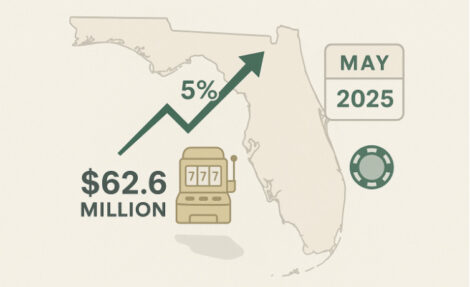
Florida’s eight non-tribal casinos posted $62.6 million in net slot-machine revenue for May 2025. That marks a 4.9% increase over the same month last year and a 5.9% jump compared to April. May delivered the second-best result of the fiscal year, just behind March’s $66.7 million. Year-to-date, these venues have generated $635.3 million in slot revenue.
The growth in physical venues comes at a time when many players also explore online alternatives and check out the full list of Florida casino sites and apps that compete by mixing diverse games with custom-made bonuses and mobile access built for real convenience. Together, live and online play are pushing gambling revenues in the state to new highs.
Magic City Casino led the May revenue numbers with $13.7 million, a 30% year-over-year increase. Harrah’s Pompano Beach followed at $11.1 million and remained nearly flat compared to last year. Hialeah Park, Calder Race Course, and Casino Miami each brought in just over $8 million, marking stable returns in a competitive market. This strong and steady performance reflects both the limits and the opportunities defined by Florida’s strict gambling framework.
According to the gambling laws and regulations in Florida, slot machines are permitted only at tribal casinos and the eight pari-mutuel facilities in Miami-Dade and Broward, all overseen by the Florida Gaming Control Commission (FGCC). These rules limit where slot machines can operate, separating the market from other states that license a wider range of commercial casinos. This distinction keeps the Florida market concentrated, with a handful of venues accounting for most activity.
At the same time, the centralization allows for more effective control and has helped state and local authorities coordinate enforcement efforts against illegal gambling operations.
An example of such joint action came in April this year, when the Florida Gaming Control Commission and the Leon County Sheriff’s Office conducted an operation that resulted in shutting down three illegal casinos in the Tallahassee area. On the occasion officers seized $92,167.10 in cash, 401 illegal gambling machines, and related equipment. The crackdown showed how regulators are stepping up enforcement against unauthorized gambling operations. It also sent a message to operators and players that the state is serious about policing the line between legal and illegal play.
In their attempt to reinforce the efforts, lawmakers even put forward a state bill SB 1404, which proposed tougher penalties for illegal gambling, including slot-machine trafficking and unlicensed operations. The bill suggested penalties ranging from misdemeanors to first-degree felonies, depending on scale and repeat offenses, and was set to take effect on October 1, 2025. However, it failed in committee on June 16, 2025, leaving the current legal framework unchanged, at least for the time being.
Florida’s stalled bill contrasts with US gambling trends that continue to climb. Nationally, the American Gaming Association’s State of the States report for 2025 shows commercial casino and sports betting revenue topping $72 billion in 2024, a record-setting figure that represents a 7.5% increase from the prior year. Florida’s non-tribal casino numbers, while notable at the state level, account for only a small share of this nationwide total. Still, these seemingly humble numbers, coming from a state with a population seven times larger than Nevada’s, stem from a highly specific legal framework.
Florida’s gambling sector stands apart from more expansive markets because of the Seminole Tribe’s compact with the state, which grants the tribe exclusive rights to key gaming activities. As a result, Seminole-operated casinos, including the Hard Rock properties, generate the majority of Florida’s gambling revenue, while the smaller pari-mutuel facilities compete in a limited non-tribal segment defined mostly by slot machines.
Despite being heavily constrained, the market’s economic footprint remains substantial. According to the American Gaming Association, non-tribal slot revenues are taxed at 35%, with proceeds channeled into the state’s Educational Enhancement Trust Fund. In fiscal year 2023, this generated approximately $241.8 million for Florida’s public schools, helping to finance classroom materials, infrastructure repairs, and technology upgrades.
Beyond tax contributions, casino operations sustain a wide employment base. As of late 2024, Florida’s combined gambling sector, including non-tribal and tribal facilities, employed an estimated 72,800 people – ranking fifth nationwide in casino-related jobs. In Miami-Dade and Broward counties, non-tribal casinos create steady roles in hospitality, security, and facility maintenance, while also supporting local vendors and service providers.
Moreover, a 2022 report from PlayFL estimated that Florida’s casinos generate $7.55 billion in total economic activity. This figure includes gambling revenue, wages paid to employees, supplier contracts, and the money spent at local businesses connected to casino operations. Florida ranked fourth nationally by economic impact, despite having relatively few licensed venues.
As lawmakers and regulators look ahead, the financial contributions of the gambling sector will likely remain central to discussions – not only as a source of revenue, but as a foundation for local jobs and broader regional development.