

AUTHORITY VS. SENSATIONALISM | The online battle for hurricane-hungry eyeballs
In a world where endless information about seemingly every topic is at our fingertips, it is important to find reliable sources when the topic is hurricane season and potential threats unfolding in the tropics.
Seeking up-to-the-minute hurricane information online can take you down a rabbit hole that starts with national weather brands and local meteorologists and leads to storm chasers, do-it-yourself hurricane mapping, doomsayers and more, more, more.
“More is not always better, especially when it comes to mixed messaging,” National Hurricane Center Senior Hurricane Specialist John Cangialosi said. “Not everything is equal. On social media, it is hard to see what is reliable and not reliable.”
He said although it is easy to make interesting graphics, and model information that is from an official model source – the problem stems around a meteorologist is almost like a trained doctor.
“Information that you get from models and data sources are open to interpretation,” Cangialosi said. “It is really important to stick to trained meteorologists that do it for a living – that filter out good and bad information.”
It is also important to find a community broadcast meteorologist in the area, as the National Hurricane Center cannot be local enough. Cangialosi said the Tampa Bay Office has a great staff and provides active information for the Lee County area, which broadcast meteorologist use.
“You shouldn’t take financial advice or health advice from just anybody,” he said. “You have to look at it on the same lines.”
Cangialosi said it is never a bad idea to use multiple sources while filtering out the bad ones, as those sources can cause panic by posting models that are not super skillful.
With the panic comes fatigue that tunes out the important information.
“There’s so much noise that it gets hard to ignore,” he said, adding that he encourages people to come back to their official, reliable source to find out what is truly happening.
The National Hurricane Center is trying to produce more consistent messaging of what is going on in the tropics to increase a source of stability.
“Rather than see hype and models everywhere, we want to come back to a stable source,” Cangialosi said.
Cangialosi said it is important to think, “What I can do for my own self, own house and own family?”
“We want you to be zoomed in and not zoomed out,” he said, adding that individuals should try to mute out the noise if their area is threatened with a storm. “It’s not good to play meteorologist. It’s better to figure out what to do to get prepared. It’s more productive and better use of the time.”
Find a forecast you can trust
When clicks equal cash, there are plenty of bad actors online pushing exaggerated or downright false information
“There are all sorts of things that can be done with graphics and AI,” said AccuWeather Lead Hurricane Expert Alex DaSilva, who encourages people to go to government sources and webpages that are trusted.
DaSilva said some of the information presented is not necessarily wrong but can be blown out of proportion to a worst-case scenario to get clicks.
“We try to explain the different scenarios – it could be a major hurricane, but these are the factors at play. If the storm does this, this environmental condition is met and could see that higher-end scenario,” he said. “There is a difference between more of the official sources – they break down the different scenarios verse people just on social media looking for likes.”
DaSilva said they do not want to mislead the public, especially with high end potential scenarios, if not warranted.
“We want to be as realistic as possible. You explain the high end, low percentage change and explain why,” he said to make people more comfortable. “My advice, go directly to the site and be a little wary on social media.”
DaSilva said to be careful when things are reposted on social media.
“We at AccuWeather try to boil it down to make it the most easy to understand, explain different scenarios, have graphics, and do the tracks. A lot of times we are very close to the National Hurricane Center. Sometimes we vary a little bit. It’s all about communication – communicating the different risks for different people,” he said. “We try to explain things a little bit more, so the information is easily digestible for the general public to make the best decisions for their family.”
A focus on storytelling
Dr. Rick Knabb, The Weather Channel’s on-air hurricane expert and tropical program manager, said one of the main reasons he does what he does is to provide one of those reliable sources.
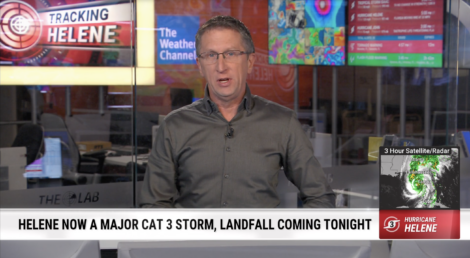
The Weather Channel’s on-air hurricane expert and tropical program manager Dr. Rick Knabb says it’s important to verify any hurricane information you come across in terms of where it comes from, the expertise and knowledge behind the information provided. PROVIDED
“We bring a lot of expertise to the weather coverage team of experts,” he said.
The Weather Channel’s focus is storytelling to really help people understand, not just what the forecast is, but what it means to them and what they need to do about the weather they are facing.
“There are reasons why The Weather Channel has been named the No. 1 trusted news – trust that has been built on expertise and understanding not only what the weather can do, but need to do to have every advantage to be safe,” Knabb said.
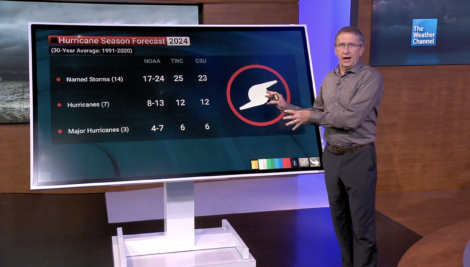
The Weather Channel’s on-air hurricane expert and tropical program manager Dr. Rick Knabb at work. PROVIDED
With access to all kinds of information, he said, it is important to verify that information in terms of where it comes from, the expertise and knowledge behind the information provided.
“You don’t need to look very far to find trusted sources of information. There are lots of voices out there with social media and all the different ways we have to communicate,” Knabb said. “You can and will hear all kinds of conflicting information. Confusion often times leads to inaction. We cut through all of that and give people directly the risk of wind, water, and what you should do to respond to those hazards.”
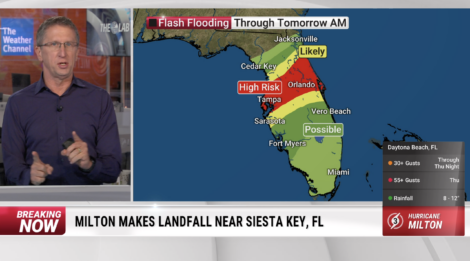
The Weather Channel’s on-air hurricane expert and tropical program manager Dr. Rick Knabb says it’s important to verify any hurricane information you come across in terms of where it comes from, the expertise and knowledge behind the information provided. PROVIDED
He said they focus on the hazards and risk of the hazards.
Knabb said to safely get through a hurricane season, start preparing before it begins – supplies, evacuation plan, making sure the home is insured and strengthen the home. He said also look out for elderly friends and family members that have mobility limitations or health issues.
“You have to treat every new storm you are facing with the respect and the response it deserves because every hurricane threat is a real threat. Even in past events you did not get the worst of the storm, there is no guarantee that will be the outcome next time,” he said.
A Floridian’s one-man weather brand
While government sources and big-media brands dominate hurricane reporting, the digital world allows everyday individuals who provide legitimate and useful hurricane content to extend their reach to millions of people they couldn’t have connected with even a decade ago.
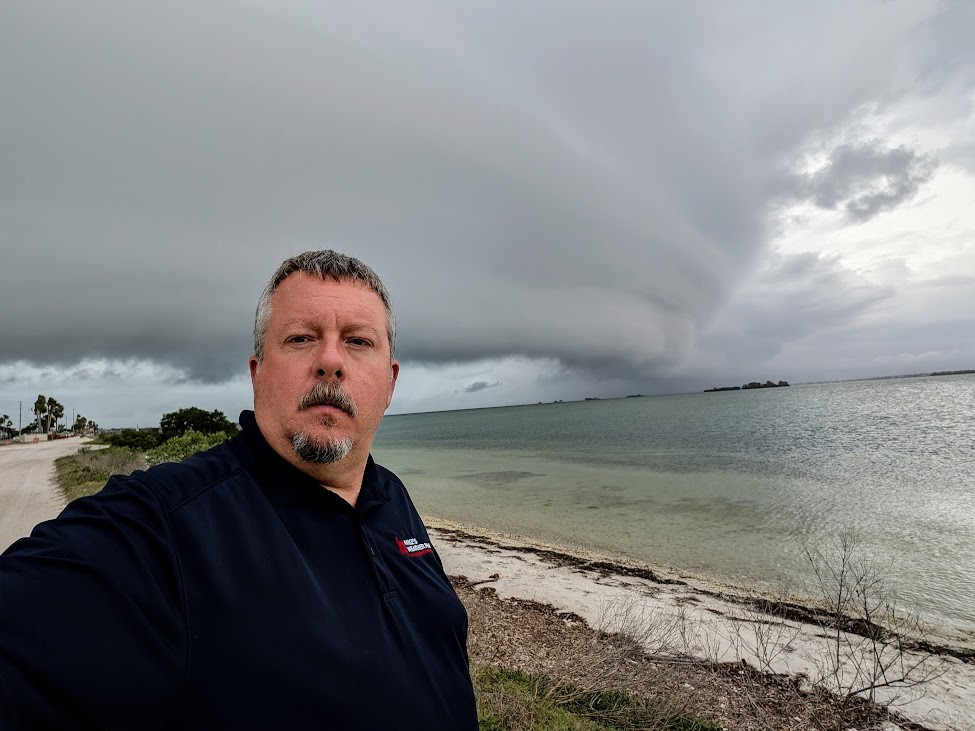
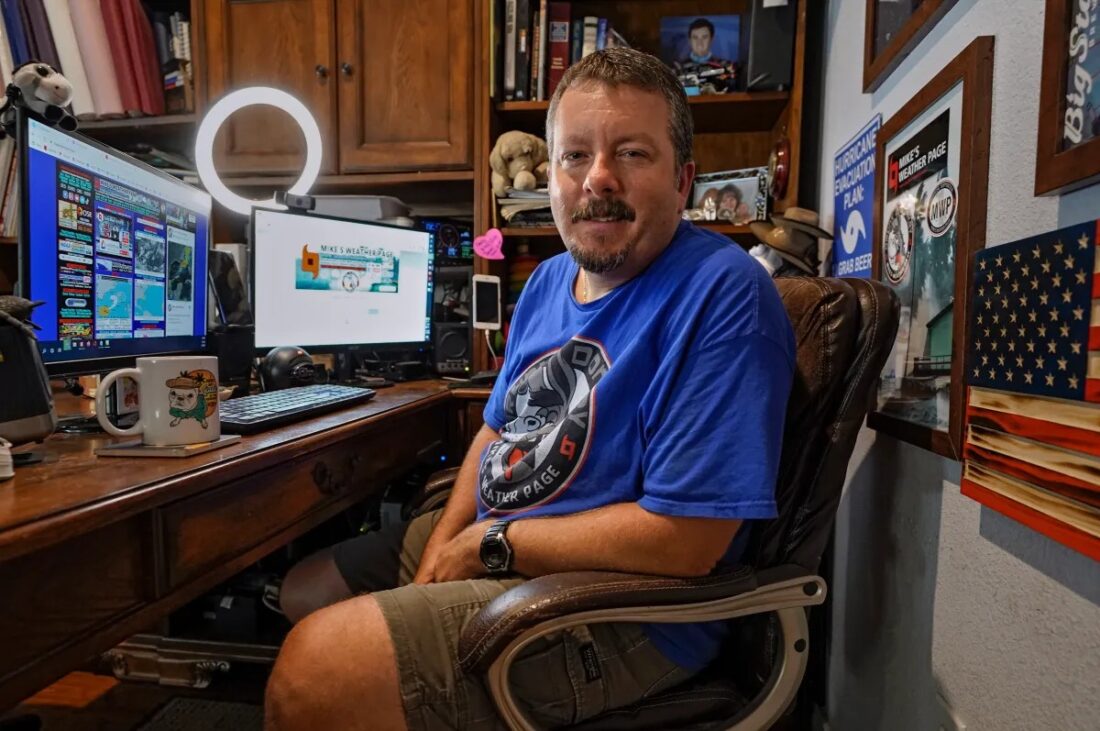
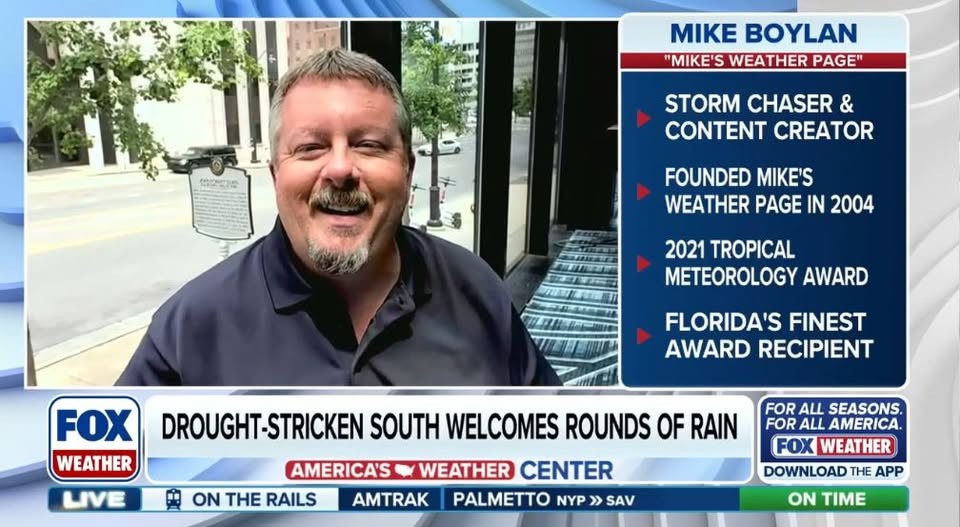
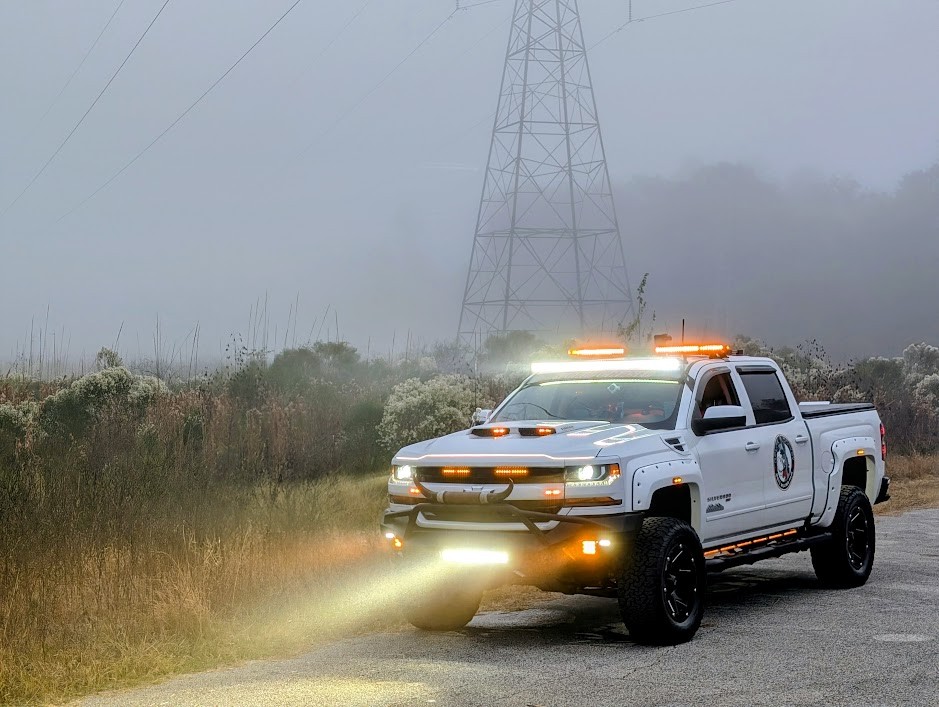
Floridian Mike Boylan, founder of Mike’s Weather Page, is a prime example, bringing his personality-driven hurricane content to an audience of more than 2 million social media followers.
In 2004, Boylan says he began paying more attention to the weather as Hurricane Charley approached his home near Tampa.
“Honestly, when I started, I didn’t know anything. When I was doing this, I was sharing models,” said Mike Boylan, of Mike’s Weather Page, adding that now when he sees something he does his homework.
He now is touching shoulders with other meteorologists and invited to do speeches at such places as NASA.
“It’s pretty cool to be in the weather world,” Boylan said.
With the lack of information online at that time, Boylan became addicted to tracking the storm and later became more obsessed with learning about the weather. In 2006, he bought a domain (spaghettimodels.com) and when social media came around everything blew up.
“I fell under the trap years ago, more into the likes and clicks,” Boylan said. “I grew out of that phase quick.”
He said people trusted him and he “read the vibe and read the room” and changed his tactic.
Consistency is what drives him now, as well as providing all the scenarios to his followers.
“Generally, people like to think for themselves,” Boylan said. “I stay away from adjectives and dramatizing things until there is a time we need to.”
Boylan said the core of his fans love the what ifs, as well as the scenarios.
“I mix in what I have seen in the past,” he said. “You get to know what works and doesn’t work and what people want. Words matter – how you arrange them and present them.”
His No. 1 source is his website, which aggregates expert weather content from around the globe.
“The website is a critical part of a lot of people’s lives. It has everything on it – a one-stop shop – every graphic and every possible picture,” Boylan said.
He said it is important to reset the button every hurricane season as every storm has its own story.
“Become weather aware. Always pay attention to the forecast,” Boylan said. “Social media is really tough and it really comes down to trusted sources. You need to go after accounts that you trust. People are going to hype, and they love the clicks and the likes. You have to really know.”
He said individuals should do their own research and establish a trusted source in the off season, as local meteorologists are the ones to turn to when hurricanes come close to their area.