

Garden Club of Cape Coral | A sense of place
By SHERIE BLEILER
news@breezenewspapers.com
What makes a community unique? Part of its character comes from the plants that originate there. Consider the statement that our native royal palms make along both sides of McGregor Boulevard. Reaching 50-100 feet, they can live over 100 years. Thomas Edison planted a 2-mile stretch of these iconic palms in 1901 giving rise to Fort Myers’ nickname, City of Palms. This beginning grew to 1,800 trees along McGregor stretching 10 miles. In nature, these palms are found from southern Florida to northern South America.
I was surprised to learn that papaya fruit is native. Papaya seeds found in Lee County were dated to be from about 300 AD. Also found in Mexico and into Central America, they have since been hybridized into delicious varieties.
Florida ranks among the most diverse states in the U.S. for botanical life. There are 3,200 plants native to Florida. Of those, 320 grow in Florida and no other place. Because they are endemic to Florida, and especially adapted to this area, they uniquely represent our place in the world.
May and June are optimum times to plant here in south Florida at the beginning of the rainy season. Let’s celebrate them this spring!
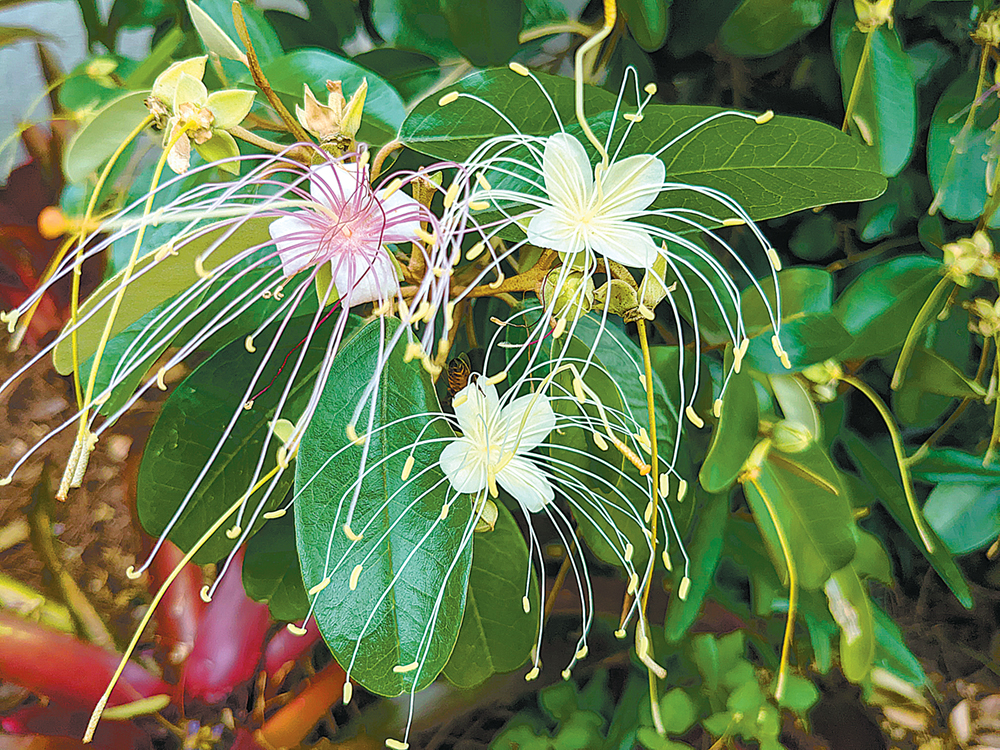
Native plants include everything from trees to ground covers. There are shrubs that grow tall and can form an interesting blooms-and-berries divider between neighbors such as Simpson stopper and Jamaica caper. Plants that produce berries for birds include the dahoon holly, a small tree with red berries in winter, and marlberry, with berries in fall. Beautyberry has purple berries along its stems. Birds may nest in a firebush, which has small berries. All of these serve as critical food sources for migrating birds. Plant one for our birds!
Useful ground covers include pineland heliotrope, golden creeper, sunshine mimosa, wild petunia and a personal favorite, turkey tangle fogfruit. All bloom and grow but stay low.
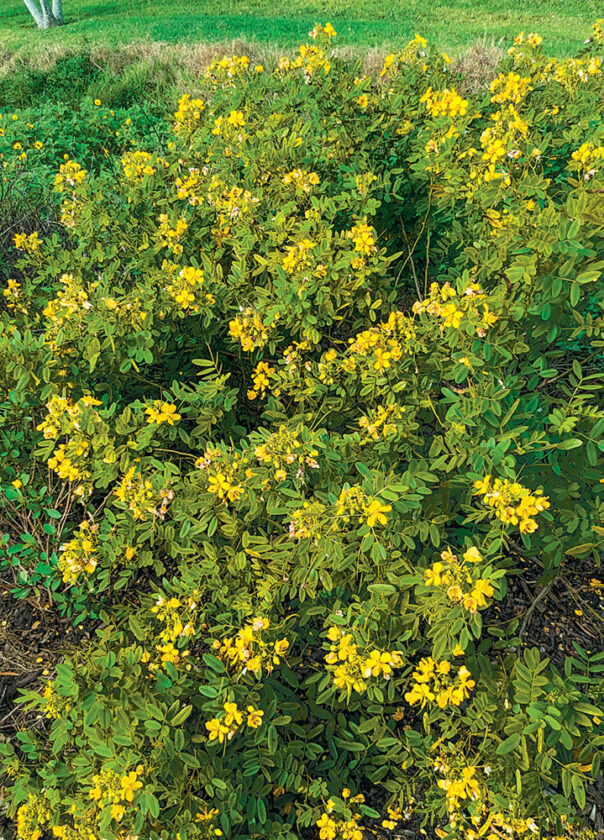
Pollinator plants are especially important because our bees, butterflies and other pollinators have developed alongside these plants to optimize the benefits from each other. Plants such as tropical sage (salvia), dune sunflower, scorpiontail, tickseed (coreopsis) and teabush draw butterflies and bees in with nectar and pollen in their flowers. They happily grow in the sand without artificial fertilizer. Some also play host to butterfly caterpillars. For example, gulf fritillaries and zebra longwing butterflies lay eggs on passionvine. Senna (or cassia) bushes attract yellow sulphur butterflies to lay eggs. These 4-foot bushes are covered with yellow flowers periodically throughout the year, making them attractive to people as well.
Unfortunately, large nurseries often do not prioritize native plants, perhaps because their suppliers carry so few of them. But there are many suppliers and small nurseries that do offer a variety of native plants suitable to home yards. Ask for them. I know of at least four in Lee County: one in Buckingham, in Estero, on Sanibel and near Page Field.
Find native plan information on such sites as Sanibel Captiva Conservation Foun-dation, sccf.org; Florida Native Plant Society, fnps.org; Florida Wildflowers, flawildflowers.org; and University of Florida, gardeningsolutions.ifas.ufl.edu.
Sherie Bleiler volunteers at the Cape Coral Library butterfly garden, Sands Park butterfly garden and is past president of the Garden Club of Cape Coral. Visit gardenclubofcapecoral.com.